

 See My Latest Article on HelloNation

Writing a eulogy can feel difficult because grief affects concentration, memory, and confidence. A meaningful eulogy does not need to be polished or lengthy. It needs to sound honest, reflect the person’s character, and help listeners remember what made that life matter.
What is the purpose of a eulogy?
A eulogy is a spoken tribute given at a funeral or memorial gathering. Its purpose is to help people remember the deceased as a complete person—not only by describing how they died, but by sharing how they lived, loved, worked, helped others, and shaped the lives around them.
A eulogy may also serve several practical purposes:
- It gives mourners a shared story during an emotionally difficult time.
- It acknowledges the loss without reducing the person to their final illness or circumstances.
- It offers comfort through specific memories.
- It helps people who knew the deceased in different parts of life understand one another’s connection to them.
The strongest eulogies are usually personal rather than comprehensive. They do not attempt to summarize every year, achievement, or relationship.
How do you begin writing a eulogy?
Start by collecting memories before trying to write complete sentences. Use a notebook, phone, or computer to answer simple questions:
- What did this person do that made others feel cared for?
- What phrases, habits, or expressions were uniquely theirs?
- What did they enjoy discussing?
- What challenge did they face with courage or patience?
- What is a story that captures their personality?
- What did family, friends, coworkers, neighbors, or community members learn from them?
It can help to speak with two or three people who knew the deceased in different settings. Someone may remember a family tradition, a work story, a quiet act of generosity, or an interest that was not widely known.
Do not worry if the first notes seem disorganized. Grief rarely produces a neat timeline. Collecting details first makes it easier to recognize the central themes later.
What should a meaningful eulogy include?
A useful structure is a brief opening, several personal memories, and a closing reflection. The sections do not need formal labels when spoken aloud.
Begin by identifying the person and acknowledging the gathering. For example, the opening might explain that family and friends have come together to remember someone who brought steadiness, humor, kindness, or determination into their lives.
Next, describe two or three qualities through stories. Instead of saying that someone was generous, explain how that generosity appeared. Perhaps the person regularly checked on an older neighbor, kept extra food available for unexpected guests, repaired household items instead of replacing them, or quietly helped relatives through difficult periods.
Include details that allow listeners to picture the person:
- A favorite saying
- The way they greeted people
- A familiar hobby or routine
- Music, food, books, tools, or clothing associated with them
- A story that shows their sense of humor
- A lesson they repeated or lived by
End by expressing what the person leaves behind. This may be a family tradition, a value, a relationship, a memorable phrase, or a way of treating others. A closing does not need to resolve the grief. It can simply acknowledge that the person will be missed and remembered.
How long should a eulogy be?
Most eulogies are effective when they last about three to eight minutes. That usually means approximately 500 to 1,000 spoken words, depending on the speaker’s pace and the number of pauses.
A shorter eulogy can be deeply meaningful. A longer one may be appropriate when the service includes several speakers or when the deceased had a particularly broad community of relationships, but length alone does not add significance.
Read the draft aloud. If the speech feels difficult to follow, contains repeated points, or leaves little room for emotion, remove material. Keep the stories that reveal the most about the person.
If several people plan to speak, it may help to divide subjects in advance. One person might discuss family life, another work or community involvement, and another a personal friendship. This reduces repetition and allows each speaker to contribute a distinct perspective.
How can you balance honesty and respect?
A eulogy should be truthful, but a funeral is rarely the right setting to disclose private conflicts, unresolved accusations, or sensitive family information. The goal is not to create a perfect portrait. It is to offer a fair and compassionate one.
People have complicated lives. It is acceptable to acknowledge that someone was imperfect, provided the wording is respectful and appropriate for the audience. A lighthearted story can bring warmth, but avoid humor that embarrasses relatives, exposes confidential information, or depends on an audience knowing private history.
Be especially careful with stories involving illness, addiction, estrangement, financial hardship, or legal problems. Ask whether including the detail helps mourners understand the person or merely satisfies the speaker’s need to explain the past.
What if the speaker becomes emotional?
Becoming emotional while delivering a eulogy is normal. Tears, pauses, and a shaky voice do not mean the speech has failed. They often show the importance of the relationship.
Practical preparation can make speaking easier:
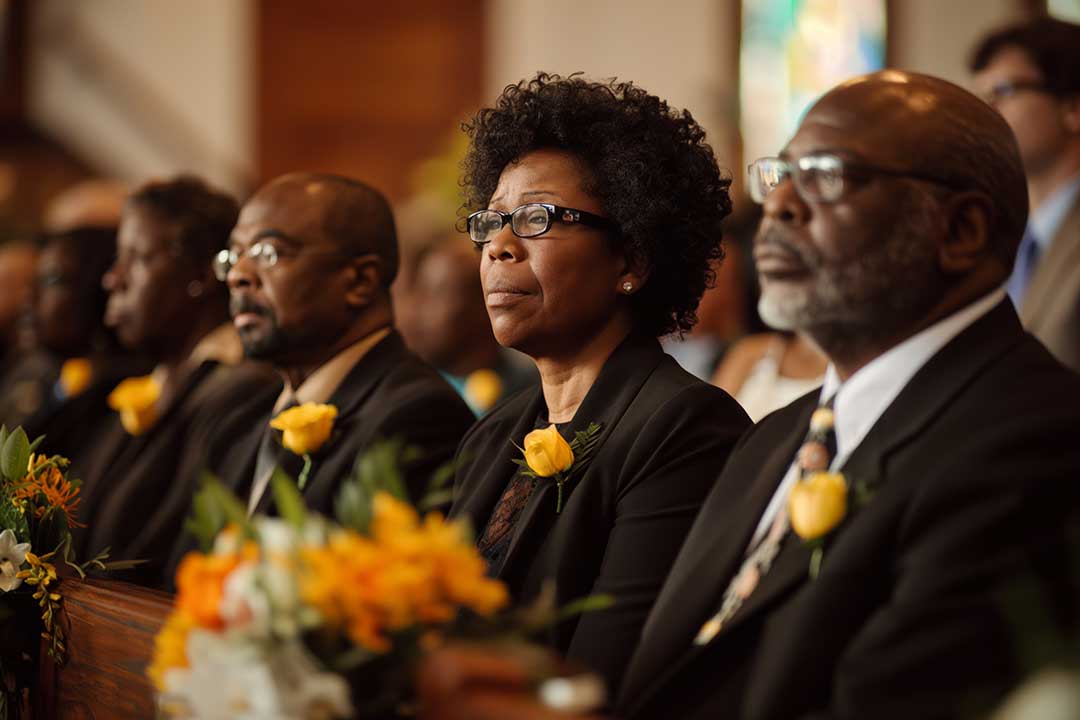
- Print the eulogy in large, readable type.
- Use wide spacing so the page is easy to scan.
- Mark places where a pause may be needed.
- Bring water.
- Practice aloud, but do not try to memorize every word.
- Ask a trusted person to hold a second copy.
- Identify someone who can continue reading if necessary.
At a gathering in Bremerton, WA, weather and travel conditions may affect attendance, especially during periods of heavy rain, strong wind, or reduced daylight. Sharing the written eulogy with a family member in advance can help ensure that the tribute is still heard if the scheduled speaker cannot arrive or becomes unable to continue.
Should you read from notes or speak from memory?
Reading from notes is often the most reliable choice. Grief can make familiar thoughts difficult to recall, even when the speaker has practiced. Notes also help maintain structure and prevent the speech from becoming much longer than intended.
A full manuscript is appropriate for most speakers. Another option is a detailed outline with key stories and phrases. Speaking entirely from memory may feel natural for a very short tribute, but it can become difficult if emotions rise unexpectedly.
Use plain language. A eulogy is not a writing contest, and formal vocabulary can create distance. The most memorable words are often simple: what the person did, how they made others feel, and what will be missed.
What common mistakes should be avoided?
Several problems can make a eulogy less effective:
- Listing accomplishments without explaining the person behind them
- Trying to mention every relative, date, or milestone
- Speaking only about death or medical details
- Using private jokes that exclude much of the audience
- Apologizing repeatedly for being emotional
- Making the tribute mainly about the speaker
- Reading so quickly that listeners cannot absorb the stories
- Adding unverified details because they sound meaningful
A eulogy does not need to cover every part of a person’s life. One specific story often communicates more than a long list of general compliments.
How can the final draft be checked?
Before the service, read the eulogy aloud to someone who knew the deceased or who understands the family’s circumstances. Confirm names, relationships, dates, and pronunciations. Remove anything that could cause unnecessary pain or confusion.
Then ask three questions:
1. Does this sound like the person being remembered?
2. Does each story serve a clear purpose?
3. Will the audience understand what made this life meaningful?
If the answer to those questions is yes, the eulogy is ready. Its value will come less from perfect delivery than from the care taken to remember the person honestly and specifically.